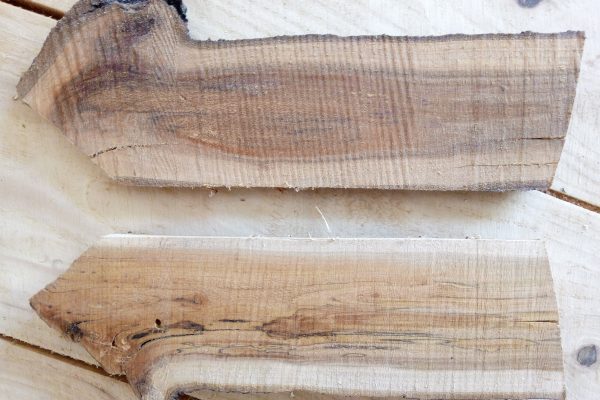
What Is the Most Beautiful Wood in Europe? 13 Species That Deserve Special Attention
 Probably most people on planet Earth have a very generalized idea of what kind of wood can be considered conditionally “elite.” For example, oak is better than pine, and redwood or blackwood from Africa is better than oak. By oak, we usually mean pedunculate oak, which grows almost everywhere in temperate climate zones and beyond. But in most cases, people do not go much further than this basic understanding.
In this article, we will try to look at this topic in more depth and show that beautiful wood grows in Europe as well, not only somewhere overseas. Moreover, some European species can confidently compete with those exotic, overseas woods. So, let’s begin.
Fruit and Nut Woods – Queens of Aesthetics, Originality, and Color in Europe
Almost everything that bears fruit or any kind of nuts will most likely have an incredibly beautiful longitudinal grain. Intricate patterns, complex shapes, smooth or sharp color transitions, and natural polychromy — all of this can easily be found in European wood species.
- Olive (Olea)
Yes, the same olive used to produce oil, preserved foods, and various edible products. Among other things, olive wood has a bright, rich orange-yellow-brown color with occasional black or white inclusions. Olive wood can confidently be placed in the TOP 5 European wood species, even though it grows mainly in Southern Europe — in countries such as Greece, Italy, the Balkan regions, and Turkey. In short, it can be found almost everywhere south of the Alps and the Danube.

- Plum (Prúnus)
This tree is not very demanding in terms of temperature, which is why it grows almost everywhere, even up to northern seas. In terms of color, plum wood is burgundy, with elements of white, yellow, and pink. Often, these colors intertwine: the burgundy tone is usually the heartwood, while the sapwood (the outer part of the trunk) is light. Plum can easily compete in color with its counterparts from Africa, Latin America, or Asia. The main issue, however, is that this wood is practically not harvested on an industrial scale.

- Apricot (Prúnus armeníaca)
Another tree that stands out for its unusual beauty and aesthetics. It slightly loses to olive, but that is where the “downsides” end. The color of apricot wood is brown-orange-yellow, with white inclusions along the edges. Products made from apricot will please even the most demanding connoisseurs. Without a doubt, apricot deserves a fair place in the TOP 5 most beautiful wood species of Europe.

- European Walnut (Júglans régia)
It is also known as Persian Walnut or English Walnut. Walnut products are well known, appreciated, and loved in Europe, at least because walnut trees grow to such thickness that commercial batches of boards can be produced from them. As a result, woodworking shops can purchase this material and create various items from it. This approach does not work with most fruit trees, since their wood often has to be harvested manually and in small quantities. Walnut wood color is gray with black tones – sometimes lighter, sometimes darker, depending heavily on the specific tree. The species itself looks quite aristocratic, as do the products made from it.

- Pistachio Tree (Pistácia)
Another pillar of European aesthetics and beauty. Yes, this tree is heat-loving and does not grow throughout all of Europe, being concentrated mainly in southern regions. However, that does not make it any less beautiful. Pistachio wood has a brown-black heartwood and yellow-white sapwood. At the same time, the sapwood area is minimal, so most household and decorative items made from pistachio are likely to consist only of heartwood.

- Apple (Mālus)
This tree grows almost all over Europe, from northern to southern borders. The color of the wood depends heavily on the apple variety and even the taste of the fruit. The sweeter and redder the fruit, the darker brown the wood tends to be. In color, apple wood resembles apricot but is generally lighter. If the apple variety has white fruit, the wood is usually cream-colored, with shades of pink, white, yellow, and so on. The heartwood and sapwood can also vary greatly in color, sometimes all the way to white. Despite the widespread nature of the tree itself, products made from apple wood are relatively rare.

- Peach (Prúnus pérsica)
Another representative of southern species. It is almost never found in industrial quantities, because the tree itself rarely grows thick enough, and sourcing it is difficult outside private gardens. In such gardens, people usually care more about fruit production than about the possibility that one day the tree could be used to make an interesting box, furniture detail, stand, or something else. In terms of color, peach wood ranges from light red to light orange, or something in between. With splashes of brown, yellow and pink. The texture is quite beautiful and eye-catching, though not every tree produces equally striking results. It varies from case to case.

- Tart Cherry (Prunus cerasus)
Sometimes this tree is called Sour Cherry to distinguish it from the Sweet Cherry. It is important to clarify right away that we are talking about European sour cherry, since cherries in Asia and other parts of the world can have completely different wood tones. A longitudinal cut of sour cherry usually has a dark or light brown heartwood and a light, almost white sapwood along the edges. Sour cherry does not make it into the TOP 5, but it is undoubtedly worthy of attention and consideration.

- Sweet Cherry (Prúnus ávium)
European sweet cherry, as a rule, cannot boast very intense color saturation. Products made from sweet cherry are usually light or dark yellow, sometimes orange. However, the annual growth rings are almost always clearly visible, forming intricate patterns. This gives sweet cherry a special charm that is unlikely to go unnoticed by anyone with even a minimal sense of aesthetics.

Hardwood Species: Fewer Colors, More Style
Hardwood species in Europe generally do not spoil woodworkers and their customers with extraordinary color solutions. Instead, they convey a certain stoic spirit, calmness, and the entire palette of European life through the centuries. Here is what we would highlight among them.
- Oak (Quércus róbur)
There are several types of oak. The classic European oak is commonly known as Pedunculate Oak, also referred to as English Oak. Other varieties include Red Oak (introduced from North America), Bog Oak (oak that has spent a long time submerged in water, developing unique characteristics), and others. Each type differs in color and appearance. The natural color of Pedunculate Oak ranges from light brown to dark brown. Its annual growth rings are almost always clearly visible, giving oak products a distinctive character and timeless appeal.

- European Beech (Fagus sylvatica)
Another representative of European hardwoods that is widely used in woodworking and turning. The color ranges from light yellow or light orange to dark brown. A slight pinkish tint is one of beech’s signature features, although it does not appear in every case.

- Black Locust (Robínia pseudoacácia)
It is worth noting that we are talking about Black Locust (Robinia pseudoacacia), also commonly known as White Acacia. Originally native to North America, this invasive species has adapted exceptionally well to European conditions and has been widespread across the continent for centuries. Its wood features a bright golden-yellow color, sometimes complemented by a darker brown heartwood. The growth rings are clearly visible on the cut surface, adding character and a distinctive appearance to every piece regardless of the chosen color combination.

- Ash (Fráxinus excélsior)
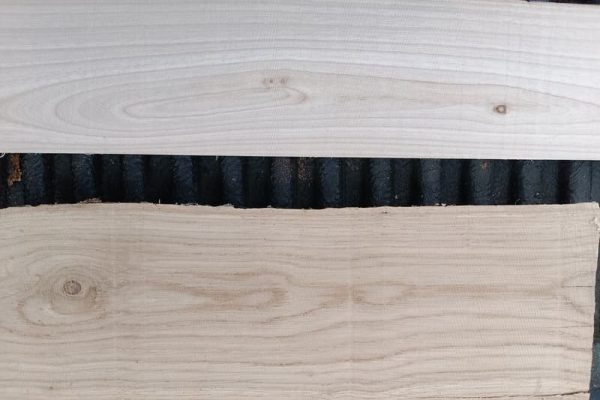
A fairly beautiful wood that, in our humble opinion, is unjustly underestimated. The color ranges from light gray transitioning into light brown, to dark gray. Ash has clearly defined annual rings, and even with relatively restrained colors, it still looks presentable and carries a subtle aristocratic touch. It loses to walnut but can be considered a viable alternative, especially in terms of price.

It is important to note that this list is not exhaustive. Some species were omitted by choice, and some – quite possibly – out of lack of knowledge. For example, maple is also a very interesting and beautiful wood. Plane tree should not be overlooked either. We should also remember bird cherry, mulberry, and hawthorn. Coniferous species and some so-called “soft” hardwoods also have their own unique charm.
Oak Phone Stand, Wooden Desktop Stand with Carved Edges
Price range: 10.50 $ through 10.90 $Select optionsRustic Plum Wood Smartphone Stand, White-and-Maroon Desk Phone Holder
Price range: 10.50 $ through 14.80 $Select optionsSweet Cherry Wood Phone Stand, Wooden Smartphone Desk Holder
Price range: 9.50 $ through 14.80 $Select optionsTart Cherry Wood Phone Stand: Orange Desk Holder for Your Phone
Price range: 9.90 $ through 11.50 $Select optionsLong Tart Cherry Smartphone Stand, Discounted Phone Stand
Price range: 7.00 $ through 7.20 $Select options


That said, if your task is to choose a wooden item as a gift – possibly custom-made – this article can serve as a useful reference. We are quite confident that you will be satisfied with European-style aesthetic appeal.
We should also mention that we deliberately avoided terms such as burls, figured grain, spalting, and other highly specific wood features. Yes, they can make any species truly magnificent, but finding such material on the open market, especially in mass-market products, is not easy. Most likely, this topic deserves a separate article.
Finally, we would like to add that we offer for sale products made from several wood species mentioned in this article. For example, our assortment includes phone stands made from plum, sour cherry, sweet cherry, oak, and ash. Alcohol shelves made from American maple, ash, and pine. Trays made from apple and ash. And much more – too much to list. Some items are left exactly as nature created them. Others are decorated with unique hand-painted designs. All of this is genuine handmade work, with no copies or identical items available on other websites. Browse our catalog – there is a good chance you will find something for yourself or your loved ones.