Sweet Cherry vs Tart Cherry: The Ultimate Guide to Differences and Similarities of Related Wood in Carpentry
 First, it’s worth saying who this article is for. Firstly, for our potential buyers and everyone interested in acquiring wooden items made from tart cherry and sweet cherry. Secondly, for carpenters, forestry and furniture industry professionals, botanists, dendrologists, etc.
Let’s start with terminology. We will talk about Prunus avium (Sweet Cherry, also Wild Cherry, European Cherry) and Prunus cerasus (Tart Cherry). These two types of wood may have other local names, but we will use those that are common in our region – namely Sweet Cherry and Tart Cherry.
Back to the roots. Natural range of sweet cherry and tart cherry
Before discussing the wood itself and products made from it, it’s useful to specify the geography of these tree species. Sweet cherry (also European cherry) grows almost throughout Europe, except in extremely cold and extremely hot, dry regions. That is, the temperate climate zone is exactly where you can find this tree.

Tart cherry grows well in the same climate zone but is much less common in Western Europe. Its natural range is shifted toward Eastern Europe, the Caucasus, and Asia Minor.

But why is that? The answer lies on several levels. First, tart cherry is a natural hybrid between sweet cherry and the so-called steppe cherry (Prunus fruticosa) and formed in its current form significantly later than wild cherry. At the same time, the cultivation of sweet cherry from its wild state into modern horticultural form happened earlier. Moreover, sweet cherry fruits are sweet, which has always been more valued than sour fruits. Simply put, sweet cherry had a time advantage to occupy more territory and fruit preferences – which resulted in greater interest in cultivation and, ultimately, much better adaptability to survive in the forest zones of Europe. Here it needs to grow tall and have a strong trunk. Meanwhile, tart cherry is more frost-resistant and better tolerates drought, especially if weather changes are sharp and unpredictable. This allowed it to feel more confident in the forest-steppe zone on windy open plains.
Tart Cherry Wood Phone Stand: Orange Desk Holder for Your Phone
Price range: 9.90 $ through 11.50 $Select optionsSweet Cherry Wood Phone Stand, Wooden Smartphone Desk Holder
Price range: 9.50 $ through 14.80 $Select optionsOak Phone Stand, Wooden Desktop Stand with Carved Edges
Price range: 10.50 $ through 10.90 $Select optionsRustic Plum Wood Smartphone Stand, White-and-Maroon Desk Phone Holder
Price range: 10.50 $ through 14.80 $Select optionsLong Tart Cherry Smartphone Stand, Discounted Phone Stand
Price range: 7.00 $ through 7.20 $Select options


Wood of sweet cherry and tart cherry. Similarities and differences
Let’s start with sweet cherry. It is a fairly massive tree that can easily reach a height of 20–30 meters, have a trunk diameter of 30–60 cm, with sprawling massive branches along the trunk. For the above reasons, sweet cherry wood can be used in carpentry – there is enough material to make boards. However, buying the wood itself or products made from it can be quite difficult, but it is possible. The price is a noticeable “medium+”, possibly closer to “high”.

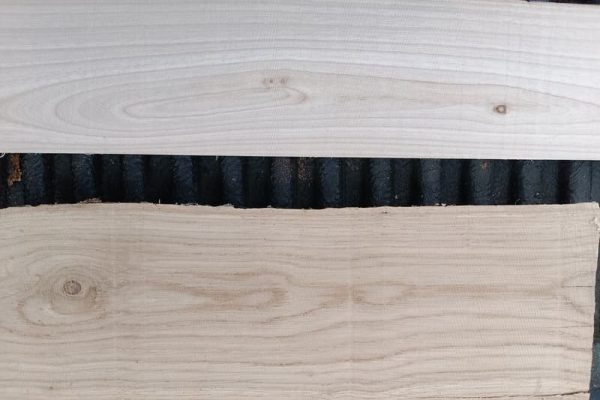
If we consider the longitudinal cut of sweet cherry, the wood color can generally have the following shades: light yellow, dark yellow, light orange, orange. Sometimes dark orange is possible, but rarely. From our observations, the darker and sweeter the fruits, the darker the wood itself.
Also, sweet cherry will most likely show veins, sometimes intricate, curly patterns. The thinner the trunk from which the item was made, the higher the chance of such “magic” of colors, strokes, and shadows. Knots also play a positive role in this process.
Wooden Wine Glass Coasters Made from Plum Wood, Rustic Wooden Wine Stands
Price range: 12.40 $ through 14.50 $Select options



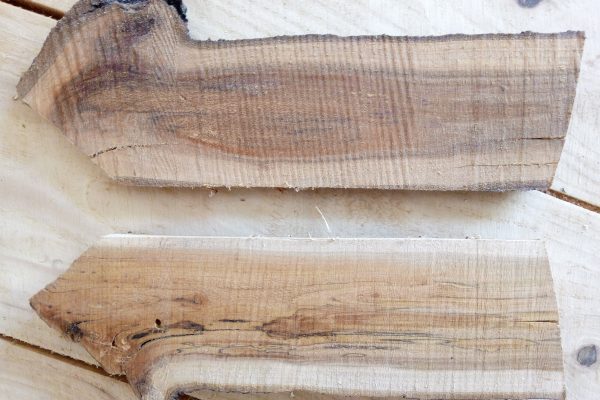
Now about tart cherry. Tart cherry height is about 6–12 meters. Trunk thickness is 15–30 cm, the latter being typical for older specimens. Tart cherry is prone to one of the “diseases” of fruit trees, namely heartwood decay at the end of life. As a result, a visually wide and even healthy tree may be practically unsuitable for carpentry, at least in the part closer to the roots.

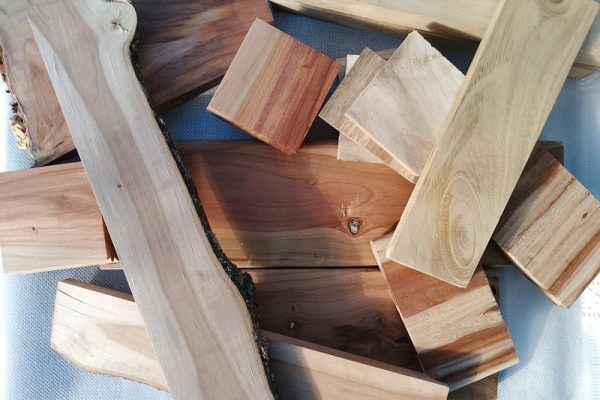
The longitudinal cut of tart cherry differs from sweet cherry in several fundamental parameters. Tart cherry has what is called sapwood at the edges, usually white or light yellow. But it may be absent on the actual carpentry item. Tart cherry wood color ranges from dark yellow, light orange, dark orange, sometimes with inclusions of brown, dark pink, light yellow, and gray.
Tart cherry wood texture usually does not have the same intricate patterns as sweet cherry, but a certain “play” of veins is present.
Summary:Prunus avium (sweet cherry) is usually lighter and with patterns in the wood, Prunus cerasus (tart cherry) is darker, with more brown-orange shades, brighter and more contrasting, but with fewer patterns.
Working with sweet cherry and tart cherry wood
Like all fruit trees, sweet cherry and tart cherry are quite capricious during drying. Cracking and warping are almost inevitable, but under certain conditions, they can be minimized.

Both species do not like end-grain processing with regular cutters. So-called “burns” occur if high-quality cutting tools are not used.
When planing or using a thicknesser, chipping is possible, especially if removing more than 1 mm at a time. But both tart cherry and sweet cherry sand very well.
They are not the most capricious woods for carpentry, but certainly not the easiest. On a scale of 1 to 5, maybe a 3.
Market of lumber and carpentry products from sweet cherry and tart cherry
It is worth saying that buying ready-made sweet cherry boards is generally possible, both from medium enterprises and private suppliers. Whereas buying tart cherry boards, especially in decent widths of 15–20 cm, is almost impossible. This wood is rarely harvested for sale because the cost of even a minimum batch of tart cherry boards is too high given the problems and complications.

Making carpentry items from Prunus cerasus is possible only for those who deal with these problems themselves and can solve them effectively. In this regard, any item made from tart cherry will be more expensive than one made from sweet cherry – on the level of apple or plum. Meanwhile, products made from sweet cherry (Prunus avium) can be significantly larger if glue is not used. If glue is used, board width is no longer decisive.
Conclusion: Tart cherry wood is more expensive than sweet cherry wood for two main reasons – limited supply and brighter color. However, in our humble opinion, sweet cherry also has its aesthetic advantages, which are worth every dollar asked. The final choice is yours.
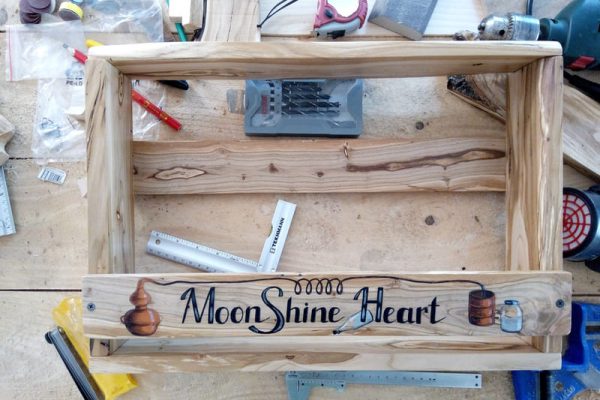
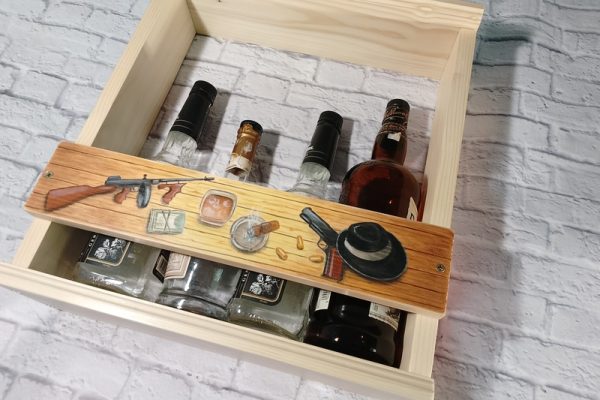
We would also like to remind you that we create and sell, without exaggeration, unique household items made of wood, including sweet and tart cherry. In our catalog, you can find wine racks, whiskey racks, schnapps racks, beer coasters, trays, smartphone and tablet stands, etc. All of this is sometimes made from exclusive types of wood – including sweet and tart cherry, and with original designs. Every item on our site exists only in a single copy, and there will be no second one. Explore our online store carefully, and you will likely find a suitable item for yourself.