Pine, Oak, Maple, Ash, Walnut. How to Choose a Wooden Wall Shelf and What’s the Difference?
 We decided to write this article because for many people wood classification and pricing are not always clear – and sometimes, to be honest, not clear at all. Why does pine cost roughly three times less than oak? Why does maple have completely different colors depending on the seller? Is it possible to buy an ash shelf for $30? In this article, we’ll try to answer these and other common questions.
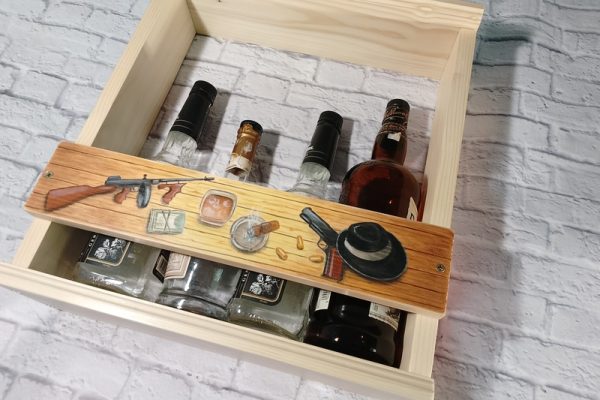
Although we sell original shelves for bourbon, whiskey, schnapps, tequila, wine, and other alcoholic beverages, this material will be useful to everyone. After all, liquor shelves, book shelves, key shelves, or shelves for any other items can be made from the same raw materials.
- A Wooden Shelf vs a «Wooden» Shelf. The Key Factor When Choosing
It’s important to understand that a label in a store saying «walnut shelf» does not automatically mean the shelf is actually made of walnut. In fact, real walnut wood may never have been anywhere near that product. In many cases – especially in the mass market – laminate or plywood is used to imitate a specific type of wood, either organic or synthetic.
The cheapest option is particle board laminated with decorative film. This solution is obviously driven by the need to minimize production costs and is not worth serious consideration. Various colorants, stains, and chemical treatments are also widely used to give almost any material a specific look, for example, «cherry finish».


That said, sometimes a shelf really is made from the wood species stated on the label. Such products are usually described as being made from «solid wood». However, solid wood itself comes in different forms. In the vast majority of cases, large furniture pieces are made from glued panels. This means individual boards, milled to specific dimensions, are glued together.
This approach is driven by three main factors: cost optimization, the need to produce items in specific dimensions (sometimes larger than a single tree trunk, such as dining tables), and the technological and natural properties of wood itself.

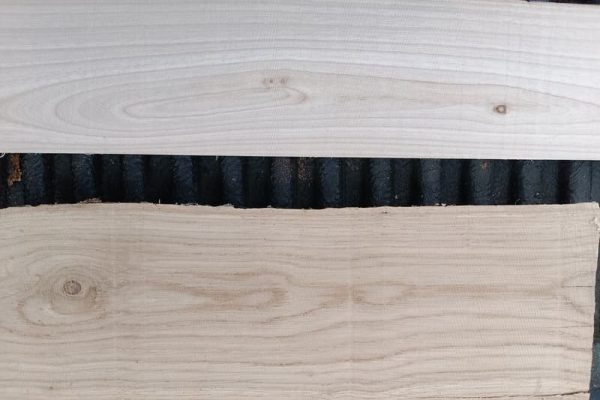
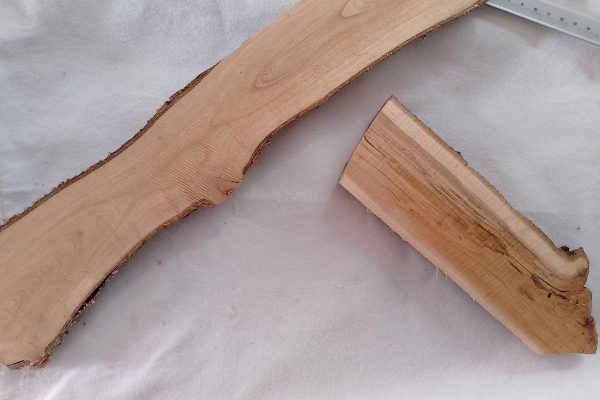
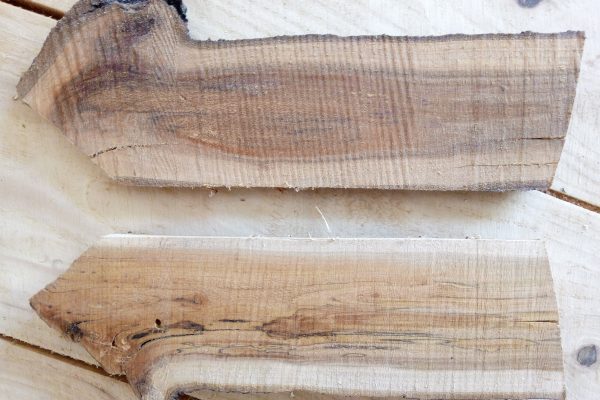
There is another option – the longitudinal slab method. In this case, the product is made strictly within the dimensions of a single board. If more material is needed, another board is added, but the boards are not glued together. This method is simpler, more natural, and more environmentally friendly. Furniture was made this way 100, 200, and very likely 1,000 years ago.
The downside of this method is a small risk (around 1–5%) that the wood may warp or crack over time. However, the shelf is unlikely to lose its functionality. Ultimately, it comes down to personal preference: natural character or perfect precision achieved with the use of glue.
Any solid wood shelf will generally cost about 3–5 times more than furniture made from particle board. This is a useful guideline when choosing. Pine may be an exception, but even pine usually costs about twice as much as compressed wood chips.
- Why Does the Color of Wooden Shelves Differ Between Manufacturers?
Before answering this question, it’s important to determine whether the shelf is made of real solid wood or an imitation. If it is solid wood, one simple fact must be understood: nature is not a factory producing standardized products. Every living organism on Earth is unique.
For example, there are nearly 150 species of maple worldwide. The same applies to oak, pine, and almost every other wood species. Some grow only in specific regions, others are invasive species that have adapted to foreign climates and soils over time.
There are also different grades within the same wood species. While this doesn’t drastically affect texture, some variations are entirely possible. Even trees of the same species and grade growing next to each other will differ in wood color and grain.

Additionally, in most cases a wall shelf is finished before sale. This can be oil, wax, stain, lacquer, or other coatings. Naturally, all of these affect the final color of the wood to some degree.
If you ask the seller or dealer directly, you’ll usually get a standard answer from a product brochure. Details about the specific grade or growing region are rarely included. At best, you’ll see the wood species, country of manufacture, and finishing materials used. The country of manufacture, of course, is not the same as the country where the tree actually grew.
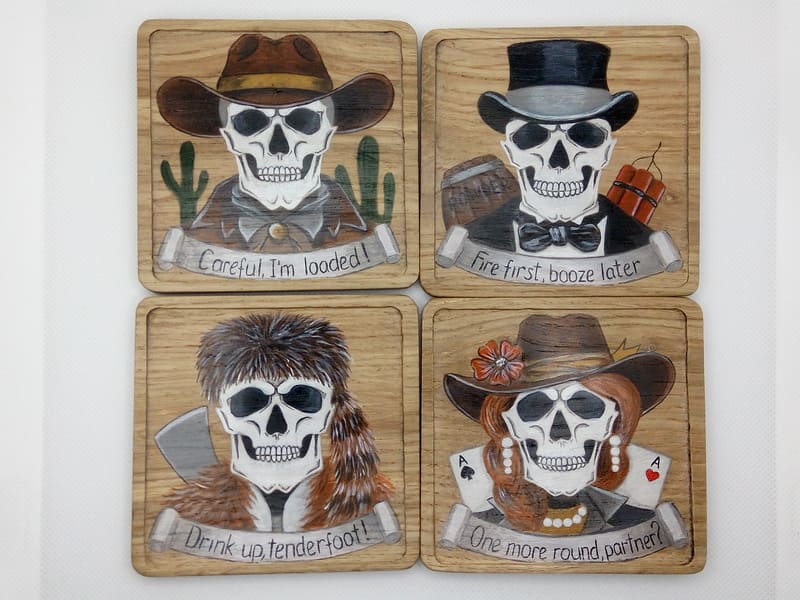
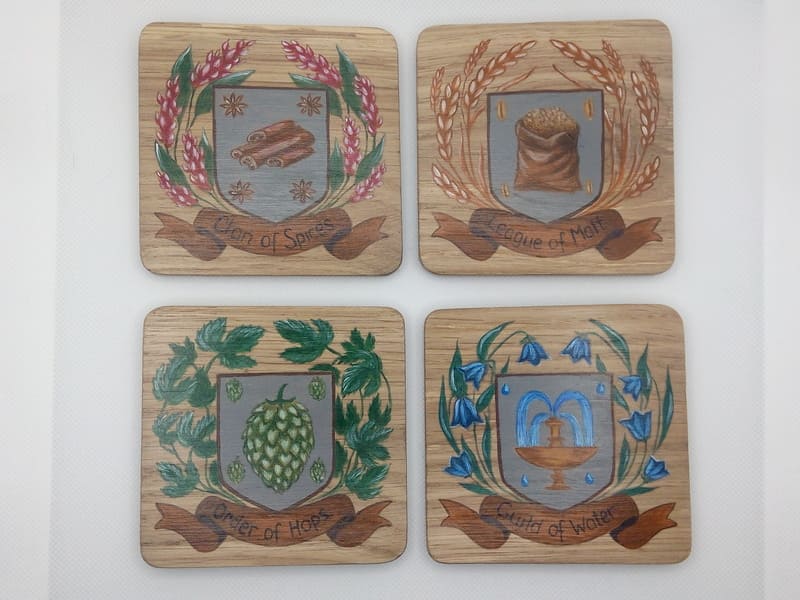
Wooden Wine Glass Coasters Made from Plum Wood, Rustic Wooden Wine Stands
Price range: 12.40 $ through 14.50 $Select options



- Why Is Oak More Expensive Than Pine, and Sweet Cherry Cheaper Than Walnut?
There is a simple rule in this world: the scarcer the product, the higher the price. Does this apply to wood? Only partially. Wood has both physical and aesthetic characteristics, and sometimes the aesthetic factor plays a dominant role.
It’s also important to remember that walnut, acacia, oak, and sweet cherry are rare or completely absent in northern countries. The same goes for African hardwoods like mahogany or ebony. Pine, on the other hand, is abundant. As a result, an oak or walnut shelf in countries like Norway or Sweden will be more expensive than in France or Italy, while pine shelves will be priced more or less the same.

Government regulation, transportation distance, terrain, and import/export restrictions also play a significant role. In other words, human factors can influence the price of a wooden shelf just as much as nature itself.
If we try to rank wood species in ideal conditions, the order would roughly look like this:
- Oak;
- Walnut;
- Ash;
- Maple;
- Sweet cherry;
- Acacia;
- Birch;
- Alder;
- Linden;
- Pine;
If we group them into price categories, the result would be:
- Oak, Walnut;
- Ash, Maple;
- Sweet cherry, Acacia;
- Birch, Alder, Linden;
- Pine;
Almost every wood species has its own appeal, advantages, and disadvantages. Yes, oak and walnut are impressive, massive, and noble. But ash and maple are not far behind. Finding shelves made from sweet cherry or other fruitwoods often requires extra effort. Even pine – the most affordable option – has its own charm with a beautiful light grain. Choose the wall shelf that personally suits you and appeals to you.
- Colorful Wooden Shelves. Is There a Point in Paying for Expensive Lumber?
If you like blue, red, yellow, white, or black shelves, the question of wood species naturally arises. Objectively speaking, in this case there is no significant difference between wood types. Yes, hardwoods are heavier and feel more solid, but visually the difference is minimal –especially when the wood is stained rather than painted.

If you look at the market, most painted shelves are made from pine. This makes perfect sense. If no one is going to see or appreciate the natural grain of a specific wood species, why pay extra for it? That said, this is just our perspective – you may have your own reasons as a buyer.
- Is It Possible to Buy a Solid Wood Shelf Cheap?
In real life, the answer is usually no – it’s unlikely. However, many factors come into play: from the price of a specific wood species in a particular region to government regulations and local labor costs.
If all favorable factors align, a small solid wood shelf might cost $30–70. That doesn’t happen often, so in reality prices usually fall in the $50–250 range. This includes most shelves, from small to fairly large ones.

The more labor involved, the higher the exclusivity, the more expensive the lumber, and the larger the shelf, the higher the final price. Some unique pieces can easily cost $500–1,000 or more – but that’s no longer mass market.
- Are Shelves Made from Unusual or Exotic Wood Species Available?
Yes, they do exist. However, you’ll rarely find them on popular online marketplaces, because such wood is not harvested on an industrial scale. This is the domain of small workshops and individual craftsmen.
First, this type of wood must be sourced – it’s not something you can just buy from a warehouse. Second, it must be dried to furniture-grade quality. Natural drying alone can take 1–2 years or more. Kiln drying is usually inaccessible to small businesses, and renting kiln capacity often requires larger volumes than they can supply.
Here, the process works in reverse: instead of the craftsman adapting to the client, the client searches for something interesting among different makers. One may have mulberry, another applewood, tart cherry, or even rare Asian or African species. Just recently, we made an alcohol shelf from apricot wood for a close acquaintance. There will never be another one like it – and it can’t simply be reordered. And yes, as you might guess, the price of such a shelf is significant.
That’s probably everything we wanted to cover on this topic. We hope this information helps you choose the right shelf – or at least clears up some of the unknowns. Taking this opportunity, we’d like to remind you that Old Red Country House specializes in creating unique shelves for whiskey, rum, wine, liqueurs, and more. We make furniture from longitudinal wood slabs in various themes, inspired by the spirit of the Good Old Days. Take a look at our catalog – you might find something that speaks to you. We’re always happy to meet new people and collaborate.